Ultimate Guide to Heavy Duty Zip Ties Tips for Maximum Strength and Durability
When it comes to securing objects in various settings, heavy duty zip ties stand out as an indispensable tool. Known for their remarkable strength and durability, these versatile fasteners are ideal for both industrial applications and everyday use. Whether you are looking to organize cables, bundle materials, or create temporary fixes, heavy duty zip ties provide a reliable solution that can withstand significant stress and environmental challenges.
In this ultimate guide, we will explore essential tips and techniques for maximizing the strength and longevity of heavy duty zip ties. Understanding the proper application methods, selecting the right size and material, and knowing how to secure them effectively can greatly enhance their performance. Additionally, we will delve into potential uses across different industries and projects, showcasing the adaptability of heavy duty zip ties in various circumstances.
By following the insights in this guide, you can ensure that your heavy duty zip ties deliver maximum performance, keeping your projects organized and secure. Whether you are a DIY enthusiast, a contractor, or a facilities manager, mastering these tips will empower you to make the most out of this essential tool.
Ultimate Guide to Heavy Duty Zip Ties Tips for Maximum Strength and Durability
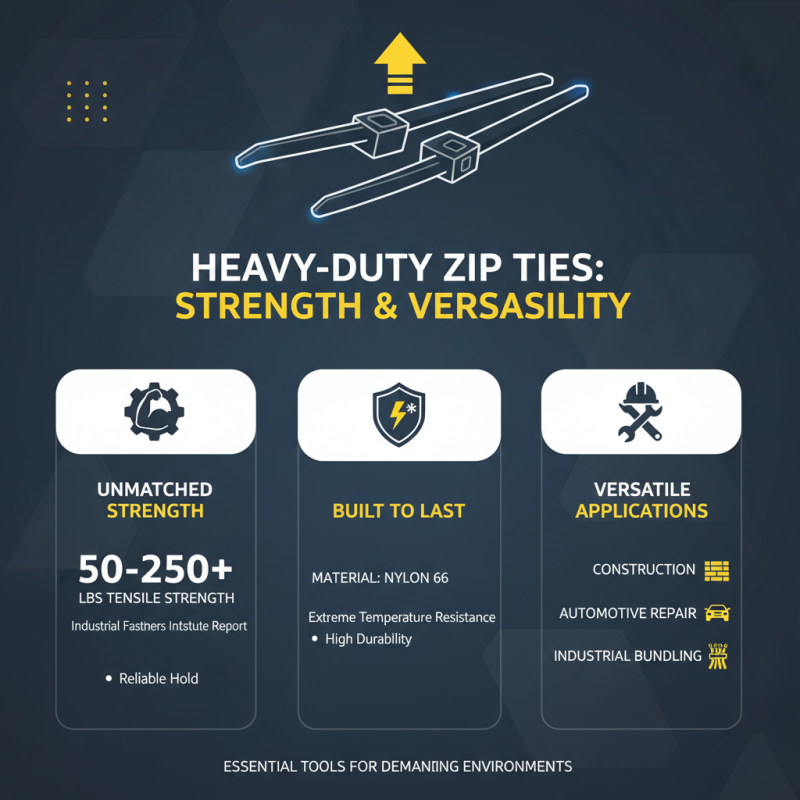
Heavy duty zip ties are essential tools in a variety of industries, renowned for their remarkable strength and durability. According to a report by the Industrial Fasteners Institute, heavy-duty zip ties can have tensile strengths ranging from 50 to over 250 pounds, depending on the material composition and design. This makes them suitable for applications ranging from construction to automotive repair, where traditional fastening methods may not provide the necessary hold. The versatility of materials, like nylon 66, which boasts high tensile strength and resistance to extreme temperatures, further enhances their reliability in demanding environments.
When choosing heavy-duty zip ties, one should consider several factors that contribute to their maximum strength and durability. The width and length of the zip tie play a critical role in its load-bearing capacity; wider ties generally distribute stress more evenly across the surface area, leading to improved performance under pressure. Additionally, proper installation techniques—such as ensuring the tie is pulled taut without over-tightening—can significantly extend the lifespan of the fastener. Research presented at the Society of Plastics Engineers indicates that improper application can lead to a 30% reduction in the expected functional lifespan of zip ties, underscoring the importance of following best practices for installation.
Understanding Heavy Duty Zip Ties: Materials and Specifications
Heavy duty zip ties are essential tools that offer enhanced strength and durability compared to standard zip ties. They are constructed from robust materials such as nylon, which is known for its exceptional tensile strength and resistance to various environmental factors. High-quality heavy-duty zip ties typically feature UV inhibitors, making them suitable for outdoor use as they can withstand prolonged exposure to sunlight without becoming brittle or breaking down. Moreover, these ties often come in various sizes and thicknesses, allowing users to select the right specifications for their specific needs, ensuring optimal performance in a range of applications.
When considering the specifications of heavy duty zip ties, it is crucial to understand their load capacity and operating temperature range. Most heavy-duty options are designed to support a significant amount of weight, with some capable of holding up to 250 pounds or more, depending on their size. Additionally, it's important to consider factors such as the locking mechanism and the ease of use when selecting zip ties for particular tasks. The design of the tie should facilitate quick and secure fastening while breaking under extreme stress to prevent damage to the materials they are securing. By choosing the right materials and specifications, users can maximize the effectiveness of heavy duty zip ties in various applications, from industrial settings to everyday household tasks.
Key Factors Affecting the Strength of Zip Ties: Load Capacity Insights
When considering the load capacity of heavy-duty zip ties, several key factors play a crucial role in determining their strength and durability. One primary element is the material composition; most heavy-duty zip ties are constructed from nylon, with variations in the formulation affecting their tensile strength. According to the Industrial Fasteners Institute, high-performance nylon zip ties can exhibit tensile strengths exceeding 120 pounds. This strength is particularly important for applications in both industrial and consumer settings, where the ties must sustain significant loads over extended periods without failure.
Another critical factor influencing load capacity is the width and thickness of the zip tie. In general, wider and thicker ties can carry more weight due to the increased surface area and cross-sectional strength. For instance, a study by the American Society of Mechanical Engineers indicates that component dimensions can enhance structural integrity, yielding a performance increase of up to 30% compared to standard models. Additionally, environmental conditions such as exposure to UV light or extreme temperatures can compromise zip ties' performance. Research has shown that UV-stabilized zip ties maintain their load capacity even when exposed to sunlight, mitigating potential degradation that can occur otherwise. Understanding these factors can help users make informed decisions when selecting heavy-duty zip ties for their specific applications.
Application Techniques for Optimal Durability and Strength in Usage
When it comes to utilizing heavy-duty zip ties, mastering application techniques is essential for achieving maximum strength and durability. According to a report published by the International Zip Tie Association (IZTA), improper installation can reduce the load-bearing capacity of zip ties by as much as 30%. To optimize performance, it is crucial to ensure that the zip tie is threaded through the intended items correctly, maintaining a straight path to avoid excessive bending or stress. Additionally, utilizing zip ties that are manufactured from UV-resistant materials can prolong their life in outdoor applications, where sun exposure can significantly weaken standard tie products.
Moreover, proper tensioning during installation can enhance the strength of heavy-duty zip ties tremendously. The IZTA recommends using tools or devices specifically designed for tensioning to achieve the necessary snugness without over-tightening, which can lead to potential damage. For instance, a study found that zip ties tightened with a calibrated tool showed a 25% increase in holding strength compared to manually installed ties. This underscores the importance of technique in maximizing the effective load they can handle, especially in critical applications such as automotive, industrial, and construction settings. Proper education on these techniques not only improves safety but also contributes to long-term cost savings through reduced failure rates.
Comparative Analysis: Heavy Duty Zip Ties vs. Standard Zip Ties Performance
When comparing heavy-duty zip ties with standard zip ties, it's essential to consider their performance in various applications. Heavy-duty zip ties are designed to withstand greater stress and tension, making them ideal for demanding tasks that standard ties may not handle effectively. For instance, while standard zip ties are useful for light organization tasks, heavy-duty versions excel in securing larger items, outdoor use, and situations requiring increased durability against weather elements. Their thicker material and reinforced design contribute to superior tensile strength, which is particularly beneficial in construction or industrial settings.
To ensure the maximum strength and durability of heavy-duty zip ties, follow these tips:
- First, always choose the appropriate size for your application; using a zip tie that is too small can compromise its strength.
- Second, ensure that you are applying them correctly; a proper installation technique includes pulling the zip tie tight but not excessively so as to avoid breakage.
- Lastly, consider using multiple zip ties in layers for added strength on larger objects or bundles.
These strategies not only enhance the performance of heavy-duty zip ties but also ensure a secure and reliable hold in any situation.
Conclusion
This ultimate guide to heavy duty zip ties delves into their materials and specifications, shedding light on the characteristics that contribute to their superior strength and durability. Key factors such as load capacity and the correct application techniques are crucial in maximizing their performance. Additionally, a comparative analysis reveals how heavy duty zip ties outperform standard zip ties in various scenarios, making them a dependable choice for demanding tasks.
To ensure longevity, best practices for storing and handling heavy duty zip ties are also highlighted. By understanding these essential tips and techniques, users can effectively harness the full potential of heavy duty zip ties, ensuring they remain secure and reliable in their applications.